2026 Best Flywheel Housing Manufacturers and Suppliers?
Choosing the right Flywheel Housing manufacturer or supplier in 2026 requires more than comparing catalog prices. It requires evidence. This component connects the engine, transmission, starter, clutch, and sometimes critical mounting systems. A small machining error can create vibration, misalignment, premature seal wear, or difficult installation.
Manufacturing quality expert W. Edwards Deming said, “Quality comes not from inspection, but from the improvement of the production process.” That principle remains highly relevant to Flywheel Housing production. Strong suppliers should demonstrate controlled casting or fabrication processes, documented dimensional checks, material traceability, and repeatable machining accuracy. Buyers should also examine alignment tolerances, bolt-pattern compatibility, corrosion protection, and testing records. These details matter on a workshop floor, where a housing must fit without forced adjustment.
This 2026 guide evaluates leading Flywheel Housing manufacturers and suppliers through practical criteria. It considers engineering capability, custom design support, production capacity, delivery consistency, warranty terms, and after-sales communication. ISO certification can be useful evidence, but it should not replace technical verification. Certifications alone do not guarantee a perfect part.
The market is not perfectly transparent. Supplier data may be incomplete. Some rankings may change by region, application, or production volume. That uncertainty deserves attention. A supplier serving heavy-duty diesel engines may not suit agricultural equipment or industrial power systems. The best choice depends on verified drawings, operating conditions, installation requirements, and long-term support. This review aims to make that comparison clearer, while recognizing that even a well-researched recommendation needs final engineering confirmation.
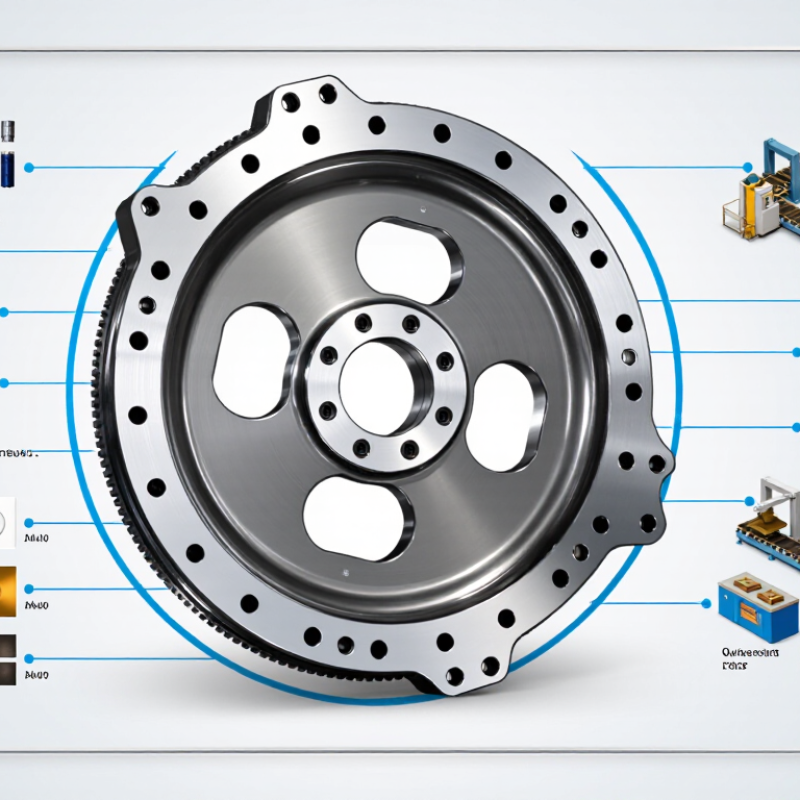
What Is a Flywheel Housing and What Does It Do?
A flywheel housing is the rigid interface between an engine and its transmission. It centers the crankshaft axis with the transmission input shaft. It also encloses the flywheel, clutch, and starter gear. This alignment matters. Even a small offset can create vibration, clutch wear, or premature bearing damage.
The housing carries structural loads while resisting heat, torsional pulses, and installation stress. Common materials include cast iron and aluminum alloys. Cast iron offers stiffness and durability. Aluminum reduces weight but may require stronger ribbing. SAE J617 provides dimensional guidance for several housing interfaces, helping suppliers maintain interchangeability during equipment repairs. In practice, technicians should check the bore, bolt pattern, dowel locations, and runout. Visual inspection alone is insufficient.
Market context still matters. The International Energy Agency reported that electric cars exceeded 18% of global new-car sales in 2023. However, industrial engines, commercial vehicles, agricultural machines, and replacement powertrains still use flywheel housings extensively. Demand is changing, not disappearing. Manufacturers now face tighter weight, noise, and vibration requirements. That assumption needs checking. A lighter housing is not automatically better. Poor rib design can amplify resonance, while weak machining control can disturb shaft alignment. Supplier evaluations should include coordinate-measuring records, material certificates, fatigue testing, and traceable quality procedures. Suppliers should also explain how they control casting porosity and thermal distortion.
How Flywheel Housing Manufacturers Design and Produce Them
Flywheel housing manufacturers begin with the engine, transmission, and mounting conditions. They measure bolt patterns, shaft alignment, clearance, and vibration loads before drawing the housing. A small error here can create noise, leakage, or premature bearing wear.
Most housings use cast iron or aluminum alloy. Cast iron handles heavy vibration and high temperatures, while aluminum reduces vehicle weight. Engineers create digital models, then test wall thickness around mounting ears and inspection openings. Rib placement matters. Too little support causes distortion; too much material increases weight and machining time.
Production usually includes casting, cooling, trimming, heat treatment, and precision machining. CNC equipment cuts the crankshaft opening and mounting faces within tight tolerances. Workers inspect threaded holes with gauges and check flatness on a coordinate measuring machine. Some suppliers also perform vibration, pressure, and endurance tests using production-like loads.
Practical experience still exposes weaknesses. A housing may pass dimensional inspection yet develop cracks after repeated thermal cycles. That is why reliable manufacturers review failed samples, not only successful reports. Clear material certificates, traceable inspection records, and controlled process changes help buyers compare suppliers in 2026. However, no design is perfect. Engineers should question unusual noise, uneven contact marks, or unexplained casting pores before approving a production batch.
Key Criteria for Evaluating Flywheel Housing Suppliers in 2026
2026 Best Flywheel Housing Manufacturers and Suppliers?
Key Criteria for Evaluating Flywheel Housing Suppliers in 2026
Material control should be the first checkpoint. Ductile iron and aluminum alloys require verified chemistry, tensile strength, and heat-treatment records. The World Foundry Organization’s 2023 census reported global metal casting production above 100 million tonnes. That scale increases competition, but it does not guarantee consistent housing quality. Ask for batch-level traceability, not general certificates.
Dimensional accuracy matters near the crankshaft, starter opening, and transmission interface. Request coordinate-measuring-machine reports with clear datum references. ISO Survey 2022 recorded 1,265,216 ISO 9001 certificates worldwide. Certification shows process discipline, though it does not prove every housing fits correctly. Independent first-article inspection remains essential.
Supplier evaluation should also include fatigue testing, vibration testing, corrosion protection, and machining capability. Review rejection rates, corrective-action history, and documented control plans. A strong supplier can explain how casting porosity is detected and repaired. They should also provide realistic tooling, sampling, and delivery schedules. Forecast promises deserve caution.
Total cost is more useful than the quoted unit price. Include tooling changes, packaging damage, inspection labor, and field returns. A 2024 automotive supplier survey from McKinsey identified resilience and digital production visibility as growing procurement priorities. Digital dashboards help, but physical audits still reveal weak housekeeping, worn fixtures, and informal rework. I would not ignore those details.
Top Flywheel Housing Manufacturers and Suppliers by Market
2026 Best Flywheel Housing Manufacturers and Suppliers?
Top Flywheel Housing Manufacturers and Suppliers by Market
The 2026 flywheel housing market is shaped by engine compatibility, casting quality, and delivery reliability. Manufacturers serving heavy-duty trucks often prioritize reinforced housings, precise bolt patterns, and resistance to vibration. Agricultural equipment suppliers usually focus on repair access and long service intervals. Industrial engine buyers may require custom dimensions, thicker walls, and stable performance under continuous loads.
Regional demand differs. North American suppliers commonly support fleet maintenance and replacement programs. European manufacturers often emphasize compact designs, emissions-system integration, and documented quality control. Asian production centers remain competitive for high-volume components, especially when tooling, machining, and inspection are coordinated closely. Local suppliers can respond faster, but their testing records may need closer review. That part is easy to overlook.
Experienced buyers should examine material certificates, dimensional inspection reports, surface-finish data, and fatigue-test procedures. A housing that looks accurate may still fail around mounting ears or threaded holes. Ask how suppliers control porosity in castings. Request sample measurements from several production batches, not one attractive prototype. Small details matter.
Supplier evaluation should also include packaging, technical communication, and replacement support. A damaged flange can delay an entire assembly line. Clear drawings and traceable part numbers reduce that risk. Some manufacturers offer excellent machining but weaker after-sales service. Others communicate well but lack capacity during seasonal demand. No supplier is perfect. Careful audits, reference checks, and practical fit testing remain necessary before long-term contracts.
2026 Best Flywheel Housing Manufacturers and Suppliers? - Top Flywheel Housing Manufacturers and Suppliers by Market
Regional demand proxy based on 2023 global motor vehicle production. Higher production volumes generally indicate larger addressable markets for engine components such as flywheel housings.
Data source: International Organization of Motor Vehicle Manufacturers (OICA), 2023 production statistics. Values are rounded estimates in millions of vehicles and are used as a regional market-demand proxy.