7 Air Circuit Breaker Buying Tips for Global Buyers

Choosing an Air Circuit Breaker for international projects is not simply a matter of comparing prices. The wrong decision can affect safety, uptime, maintenance costs, and delivery schedules.

Electrical educator Mike Holt states, “Circuit breakers protect conductors from overcurrent.” This basic principle deserves serious attention. A global buyer must examine rated current, breaking capacity, voltage compatibility, protection functions, and installation conditions. These details determine whether the breaker can respond safely during a short circuit or prolonged overload.

Small details matter.

For example, a dusty factory in Southeast Asia may require stronger enclosure protection than a clean indoor switch room. A coastal facility may need better corrosion resistance. A data center may value selectivity and rapid fault isolation more than a lower purchase price. These conditions cannot be judged from a product label alone.

This guide presents seven practical buying tips for Air Circuit Breaker selection. It considers technical specifications, certification documents, supplier capability, after-sales support, and long-term operating value. The advice is intended for distributors, contractors, engineers, and procurement teams working across different markets.

Still, no checklist is perfect. Project drawings may change. Local installation practices may differ. Product data can also be misunderstood. That is why experienced buyers should verify each critical requirement with the manufacturer and a qualified electrical professional.

Look beyond the quotation.

A dependable Air Circuit Breaker should match the real electrical environment, not just the expected budget. The following tips will help global buyers ask sharper questions, identify hidden risks, and make more reliable purchasing decisions.
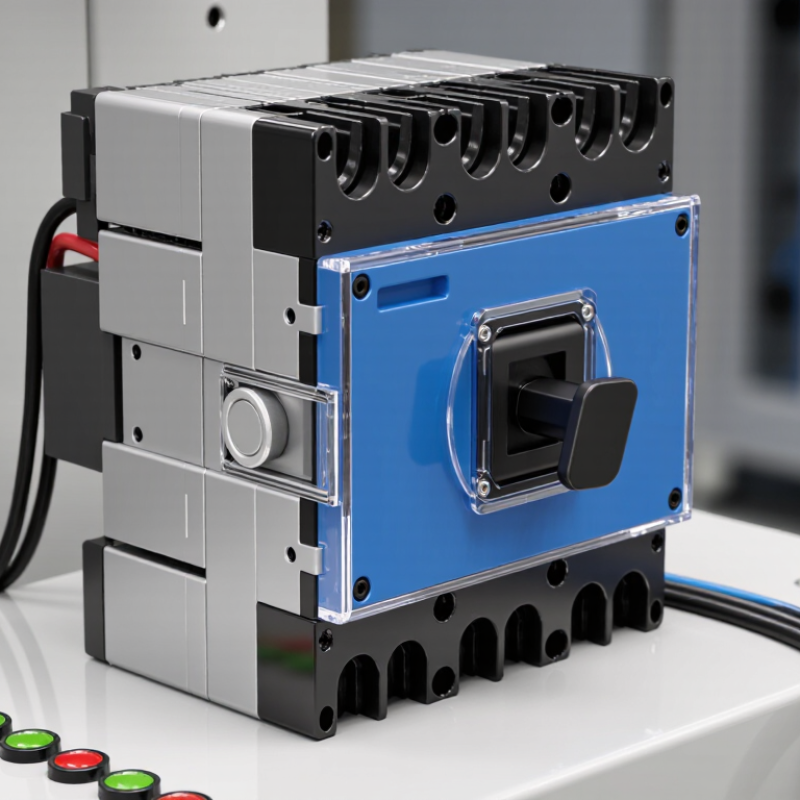
7 Air Circuit Breaker Buying Tips for Global Buyers

Define the ACB Duty: IEC 60947-2 and Typical 630–6,300 A Ratings

Buying an air circuit breaker starts with defining its duty, not its frame size. IEC 60947-2 covers low-voltage circuit breakers, including performance, insulation, temperature, and short-circuit requirements. Confirm that the proposed ACB is tested for the intended system voltage and frequency. A 630 A unit may suit a small industrial main incomer, while larger facilities often require ratings from 1,600 A to 6,300 A.

The rated current must match real operating conditions, not only the nameplate load. Check ambient temperature, enclosure ventilation, altitude, load diversity, and future expansion. Also compare the service short-circuit breaking capacity with the calculated prospective fault current. These numbers are easy to confuse. I have seen specifications that matched the current rating but failed to address short-time withstand requirements. That gap can create expensive redesign work.

Pay close attention to the trip unit and adjustment range. Electronic protection should provide suitable long-time, short-time, instantaneous, and earth-fault functions when the installation requires them. Selective coordination may demand a deliberate short-time delay, but that choice needs verification through a protection study. Request IEC test evidence, routine inspection records, wiring diagrams, and clear ratings for withdrawable or fixed installations. A clean catalogue table helps, but it cannot replace application data. Recheck every value against the actual switchboard environment.

Verify Fault Protection: Compare Icu and Ics in kA at the Installation Voltage

When buying an air circuit breaker, verify Icu and Ics at the actual installation voltage. IEC 60947-2 defines Icu as ultimate short-circuit breaking capacity. Ics indicates service breaking capacity after a fault. Both values are expressed in kA.

Do not compare a 400 V rating with a 690 V system. A breaker marked 50 kA Icu at 400 V may have a lower capacity at 690 V. Check the manufacturer’s test table, not only the nameplate. For a panel with a calculated prospective fault current of 36 kA, the selected Icu should exceed 36 kA at 400 V. Safety margin matters. So does maintenance access.

IEC 60947-2 permits Ics at 25%, 50%, 75%, or 100% of Icu. Therefore, a breaker rated 50 kA Icu and 25 kA Ics may survive the first fault, yet require careful inspection afterward. Critical facilities often prefer Ics equal to Icu, when the project budget allows it. The International Energy Agency’s Electricity 2024 report also highlights continuing growth in electricity demand, increasing pressure on distribution equipment and protection coordination. I would not choose capacity from historical load data alone. Utility changes, transformers, and parallel generators can raise fault levels unexpectedly. Confirm the short-circuit study, installation voltage, frequency, and test conditions before ordering. Small paperwork errors become expensive hardware problems.

Select Trip Technology: Electronic Units, LSI/LSIG Functions, and Selectivity

When buying an air circuit breaker, trip technology deserves more attention than frame size. Electronic trip units offer adjustable long-time, short-time, and instantaneous protection. This flexibility helps match cable capacity, transformer inrush, and downstream breaker settings. A fixed thermal-magnetic unit may be simpler, but it can create unwanted interruptions in complex systems.

LSI functions provide long-time, short-time, and instantaneous protection. LSIG adds ground-fault protection. Ground-fault pickup and delay settings require careful coordination with the installation’s earthing arrangement. IEEE 242 recommends reviewing time-current curves before approving coordination. Do not rely on catalog labels alone. Check tested combinations, available fault current, and the breaker’s interrupting rating under IEC 60947-2.

Selectivity keeps an upstream breaker closed when a downstream fault occurs. That distinction matters in hospitals, factories, and data centers. The IEA’s Electricity 2024 report estimated data centers used about 460 TWh globally in 2022, with demand potentially exceeding 1,000 TWh by 2026. Uptime Institute’s 2024 outage analysis reported that 54% of serious outages cost more than $100,000. These figures make avoidable shutdowns expensive. In practice, I would request discrimination tables, zone-selective-interlocking details, and trip-test records. One imperfect assumption remains: calculated selectivity may fail when actual fault current differs from the study. Verify it onsite.

Check Endurance Data: Electrical and Mechanical Life per IEC 60947-2

7 Air Circuit Breaker Buying Tips for Global Buyers

Endurance data deserves careful attention when selecting an air circuit breaker. IEC 60947-2 separates mechanical endurance from electrical endurance. Mechanical life measures repeated opening and closing without carrying load. Electrical life measures switching under specified current and voltage conditions. These figures are not interchangeable. A breaker may show excellent mechanical performance but require earlier contact inspection in a heavily loaded system.

Ask for the rated number of operations, test conditions, and applicable utilization category. Check whether the electrical endurance test matches your network voltage, current, power factor, and switching frequency. A factory report is more useful than a single impressive number. In practical panel reviews, operating records often reveal a different story. Dust, heat, vibration, and frequent fault clearing can reduce real service life. The standard result remains essential, but it is not a complete prediction.

Tips: Compare both endurance values. Confirm the test voltage and current. Ask how maintenance intervals were established. Check whether accessories, such as motor operators or undervoltage releases, affect the cycle count. Record every operation during commissioning and service. Small details matter. A counter reading may be wrong if it is not checked against inspection records. Also, do not assume a higher cycle figure always means better value. A lower-duty breaker may fit a lightly switched feeder, while a critical main inlet needs stronger evidence, clearer maintenance planning, and realistic operating margins.

7 Air Circuit Breaker Buying Tips for Global Buyers: Check Endurance Data

Mechanical life indicates how many no-load operating cycles the breaker mechanism is designed to withstand, while electrical life indicates switching cycles under the declared electrical test conditions. The reference levels below are commonly specified endurance points for ACB procurement; the exact declared value must be verified in the IEC 60947-2 test report and product datasheet.

Buying tip: compare both mechanical and electrical endurance, then confirm the rated voltage, rated current, utilization category, test sequence, maintenance requirements, and whether the quoted life applies to the complete breaker or only the operating mechanism.

Audit Fit, Compliance, and Cost: UL 489, IEC Marks, Spares, and 10-Year TCO

Global buyers should audit fit before comparing prices. Confirm voltage, continuous current, interrupting rating, poles, trip unit, enclosure, and ambient temperature. A 1,600-ampere frame may not suit a 1,600-ampere load after derating. Check mounting depth and terminal orientation against approved drawings. Ask for test reports and traceable certificates, not a logo printed on a brochure. For North American installations, verify UL 489 coverage for the exact configuration. For IEC projects, confirm the applicable IEC standard, conformity evidence, and marking requirements.

Do not treat certification as a complete purchasing decision. Review short-circuit performance, coordination data, insulation levels, and mechanical endurance. Confirm spare trip units, auxiliary contacts, shunt releases, and operating handles will remain available for the planned service period. A lower-cost breaker becomes expensive when one small spare requires an urgent overseas shipment. Request recommended spare quantities and storage conditions. Also inspect the supplier’s technical response; vague answers often signal future commissioning delays.

Build a ten-year total cost of ownership model. Include purchase price, freight, installation labor, testing, energy losses, maintenance, spares, downtime exposure, and disposal. Compare warranty terms carefully. A long warranty may exclude labor or shipping. TCO models are imperfect. They depend on uncertain failure rates and electricity prices. That is acceptable if assumptions are visible and reviewed by engineering, maintenance, and finance teams. One overlooked detail matters: record the final approved part number, settings, certificates, and spare list in the project file.

7 Air Circuit Breaker Buying Tips for Global Buyers — Audit Fit, Compliance, and Cost: UL 489, IEC Marks, Spares, and 10-Year TCO

Use this checklist to compare low-voltage air circuit breakers by application fit, certification evidence, documentation quality, maintainability, and total cost of ownership. Confirm the final selection against the applicable installation code, local authority requirements, and the manufacturer’s official test documentation.

Buying Tip Key Selection Dimension Verified Technical Requirement Audit Evidence to Request Common Compliance or Fit Risk 10-Year TCO Consideration Buyer Decision Rule
1 Define the electrical duty before comparing prices Rated voltage Rated current Interrupting capacity Record system voltage, frequency, continuous load current, number of poles, short-circuit current, and neutral arrangement. The breaker’s interrupting rating must be suitable for the prospective short-circuit current at its installation point. Product data sheet, nameplate information, short-circuit calculation, terminal arrangement drawing, and tested ratings at the intended voltage and frequency. Selecting by frame current alone can result in an inadequate short-circuit rating, incorrect pole configuration, or unsuitable service conditions. An incorrectly rated breaker can create redesign, replacement, outage, and inspection costs that exceed the initial purchase-price difference. Reject any quotation that does not state the complete rating combination, including voltage, frequency, current, poles, and interrupting rating.
2 Match the certification to the target market UL 489 UL 1066 IEC 60947-2 UL 489 covers molded-case circuit breakers and molded-case switches. Low-voltage AC power circuit breakers are generally evaluated under UL 1066 in North American applications. IEC 60947-2 covers circuit breakers used in low-voltage switchgear and controlgear assemblies. Certification listing or certificate, applicable product category, exact catalog or configuration reference, ratings covered, test standard edition, and any conditions of acceptability. A generic “UL” or “IEC” statement may not identify the correct product category, rating, configuration, or certification scope. Non-accepted equipment may require field evaluation, replacement, additional testing, or approval delays. Do not treat UL 489 as a universal substitute for the applicable power-circuit-breaker standard. Verify the exact standard required by the project authority.
3 Audit the complete compliance package, not only the logo CE marking Declaration of Conformity RoHS REACH CE marking indicates conformity with applicable European Union legislation; it is not, by itself, a product safety certification issued by a single central agency. The applicable directives or regulations depend on the product and its intended use. EU Declaration of Conformity, applicable legislation and standards, technical file reference, product identification, importer or economic-operator information where required, and material compliance declarations. A CE symbol without a traceable declaration, product model reference, or applicable legislation may be insufficient for an import or technical-file audit. Missing documents can cause customs holds, project delays, repeated testing, and administrative rework. Require document-to-model traceability: the exact breaker configuration on the quotation must appear in the compliance documents.
4 Check physical and system compatibility Draw-out or fixed Mounting dimensions Connection position Control voltage Confirm installation type, chassis or cradle dimensions, primary terminal positions, secondary plug arrangement, interlocking requirements, trip-unit functions, auxiliary contacts, shunt trip, undervoltage release, closing coil, and control-circuit voltage. Certified dimensional drawing, outline drawing, wiring diagram, interface schedule, accessory list, and compatibility statement for the intended switchboard. A breaker may meet its electrical rating but still be impossible to install because of incompatible dimensions, busbar positions, secondary wiring, or control voltage. Retrofit mismatch can generate engineering changes, panel modification, shipping costs, and extended downtime. Approve the product only after both the electrical schedule and the mechanical interface drawing have been signed off.
5 Evaluate protection and coordination functions Long-time Short-time Instantaneous Ground-fault Selectivity Determine whether the trip unit supports the required protection functions and adjustment ranges. Verify short-time withstand, short-time delay, instantaneous protection, ground-fault protection where required, and coordination with upstream and downstream devices. Trip-unit manual, time-current curves, protection-setting ranges, tested selective-coordination data where applicable, and a coordination study based on the project fault levels. A breaker with a suitable frame size may still lack the required trip functions or adjustment range for discrimination and arc-energy reduction. Poor coordination may increase nuisance tripping, outage extent, equipment damage, and commissioning time. Compare protection curves and setting ranges, not merely the nominal ampere rating or number of trip-unit features.
6 Price spare parts and serviceability at the time of purchase Wear parts Trip unit Arc chutes Coils Lead time Identify replaceable components such as main contacts, arc chutes, closing and trip coils, undervoltage releases, auxiliary contacts, motor operators, secondary connectors, and electronic trip units. Confirm whether the design permits inspection and replacement without replacing the entire breaker. Spare-parts list, exploded view, part numbers, recommended maintenance intervals, storage requirements, warranty terms, technical support route, and quoted lead times. A low initial price can be offset by discontinued accessories, proprietary components, long lead times, or a requirement to replace the complete breaker. Include spare inventory, freight, labor, planned outages, emergency procurement, and the cost of obsolete or unusable parts. Obtain a written spare-parts commitment for the expected service period and identify at least one approved substitute path for critical accessories.
7 Compare total cost of ownership over 10 years Purchase price Installation Testing Maintenance Downtime Use a consistent lifecycle model: initial breaker and accessories, engineering, freight, installation, commissioning tests, preventive maintenance, calibration or replacement of trip units, spare inventory, energy or operational losses where relevant, and failure-related downtime. Itemized quotation, warranty conditions, recommended maintenance schedule, test requirements, service rates, spare-part pricing, expected lead times, and assumptions used in the lifecycle calculation. Comparing only the purchase price ignores certification gaps, commissioning effort, service access, spare availability, and the financial effect of an outage. A practical calculation is: 10-year TCO = purchase + logistics + installation + commissioning + planned maintenance + spares + expected corrective work + downtime exposure − residual value. Select the lowest compliant lifecycle cost, not automatically the lowest quoted unit price. Document all assumptions so competing offers are comparable.

Reference framework: Confirm the applicable edition and national adoption of IEC 60947-2, the relevant North American product standard such as UL 1066 or UL 489 where applicable, assembly requirements such as IEC 61439 when the breaker is installed in a switchboard, and local installation and authority requirements before purchase.