2026 How to Choose the Right Power Washing Equipment?
Choosing the right power washing equipment can be daunting. There are many factors to consider. The market is flooded with options, each boasting unique features and benefits.
Power washing equipment comes in various types and sizes. You might feel overwhelmed by the choices available. Think about what you need for your specific tasks. Different projects require different tools. For example, a residential cleaning job might not need the same power as a commercial application.
Also, consider the power source. Gas-powered options provide high pressure. Electric units are quieter and easier to handle. Reflection on your needs and the equipment’s capabilities is key. Balancing cost against quality is crucial. Are you investing wisely? This decision can affect your efficiency and results.
Understanding the Basics of Power Washing Equipment
Understanding the basics of power washing equipment is essential for achieving effective results. There are several types of power washers available on the market. They vary in pressure, flow rate, and functionality. The choice of equipment significantly impacts cleaning efficiency.
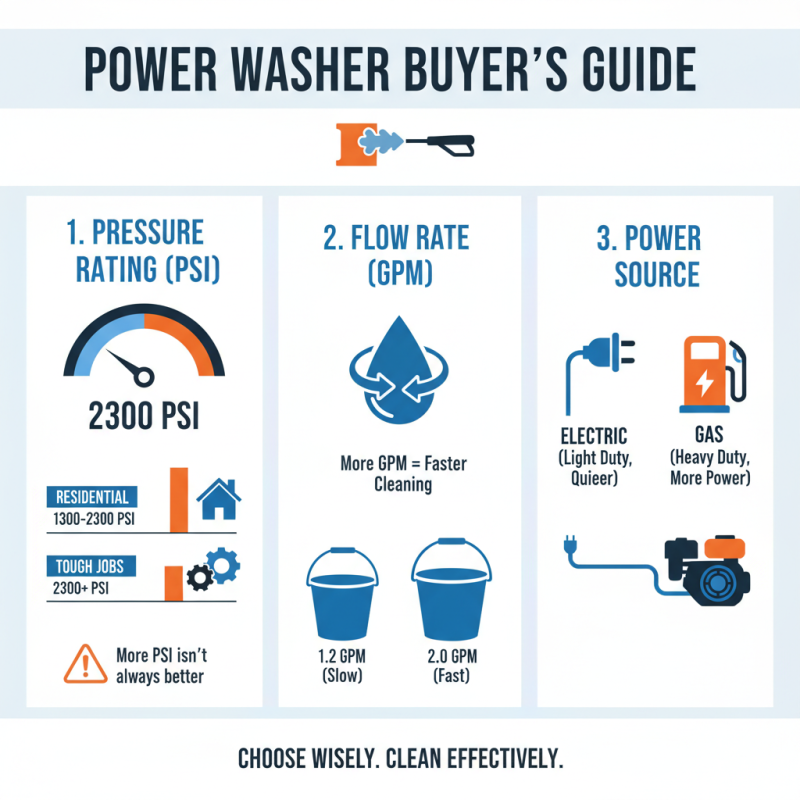
Pressure washers can be categorized based on their PSI (pounds per square inch) ratings. A report from the Cleaning Equipment Trade Association notes that residential models usually range from 1300 to 3000 PSI. This range is suitable for typical home surfaces like patios and walkways. A higher PSI isn’t always better; it can damage softer surfaces like wood or delicate stone. Users often overlook these details.
Flow rate, measured in GPM (gallons per minute), is another critical factor. The ideal flow rate helps remove dirt without causing harm. For example, a lower flow rate can be sufficient for cleaning cars but may struggle with heavily soiled driveways. Many buyers underestimate the importance of matching the right PSI and GPM to their cleaning task. This lack of knowledge can lead to frustration and unsatisfactory results.
2026 How to Choose the Right Power Washing Equipment?
| Feature |
Description |
Recommended Specifications |
| Pressure Rating |
Indicates the force of water delivered by the power washer. |
2000 - 4000 PSI |
| Water Flow Rate |
Measures how many gallons of water the machine uses per minute. |
2 - 5 GPM |
| Power Source |
The type of energy the washer uses to operate. |
Electric or Gasoline |
| Expected Use |
Determines the size and power needed based on tasks. |
Residential or Commercial |
| Portability |
Ease of transport depending on design and weight. |
Wheeled or Walk-behind |
| Accessories |
Attachments that enhance functionality (nozzles, brushes). |
Varies by model |
Identifying Your Cleaning Needs and Requirements
When selecting power washing equipment, it's crucial to assess your cleaning needs. What type of surfaces are you dealing with?
Concrete, wood, or delicate materials each require different approaches. For example, wooden decks might need lower pressure to avoid damage, while driveways can handle more aggressive cleaning methods. Evaluating your surfaces will guide your choice.
Consider the scale of your projects. Are you cleaning a small patio or a large commercial space? Larger areas may require more powerful equipment to save time. Think about water source accessibility, too. Sometimes, the ideal equipment might not work if you lack a nearby water supply. This factor should not be overlooked.
Reflect on your frequency of use. If you plan to power wash regularly, investing in higher-quality equipment makes sense. However, for occasional jobs, renting might be a better fit. This can save costs but requires planning. The decision process can feel overwhelming. Taking the time to identify your needs will ultimately lead to better results.
Evaluating Different Types of Power Washers
When evaluating power washers, several key types need consideration. Electric power washers are common for light-duty tasks. They usually operate at lower pressures, around 1300 to 2000 PSI. They are ideal for cleaning small decks and vehicles. Their lighter weight makes them easy to maneuver. However, their performance may fall short for heavier jobs.
Gas power washers provide higher pressure levels, ranging from 2500 to 4000 PSI. This makes them suitable for commercial work and tougher surfaces, like concrete or brick. A report from the American Cleaning Institute highlights that gas models can reduce cleaning time by up to 50%. Yet, they can be more cumbersome. Their maintenance requires regular checks, creating additional responsibilities for users.
Hot water power washers present another option. They use heated water to improve cleaning efficiency, especially in grease removal. A study indicated that hot water units could clean surfaces 30% faster compared to cold water models. However, they may require more careful operation. The need for fuel and careful handling can complicate their use. Choosing the right type ultimately depends on the intended tasks and user skill.
Comparing Features and Specifications of Power Washers
Choosing the right power washing equipment can be challenging. With various features and specifications available, knowing what to look for is crucial. Consider the pressure rating, as it determines cleaning power. Residential models typically range from 1300 to 2300 PSI. For tough jobs, look for higher PSI ratings. However, more pressure isn't always better.
Flow rate is another key specification. Measured in gallons per minute (GPM), it affects how quickly you can clean. A higher GPM means faster results. Yet, ensure you don’t overlook the size of the nozzle. Different nozzles create various spray patterns. Using the wrong nozzle can lead to surface damage.
Tips: Always test the equipment on a small area first. It helps you avoid costly mistakes. Regular maintenance is also necessary. Clean filters and check hoses frequently to prolong the machine's life. If you’re unsure about a feature, ask for a demonstration. This can clarify its performance and usability. Remember, in the world of power washers, not all that glitters is gold. Even popular features might not be suitable for your needs.
Budgeting for Power Washing Equipment and Maintenance Costs
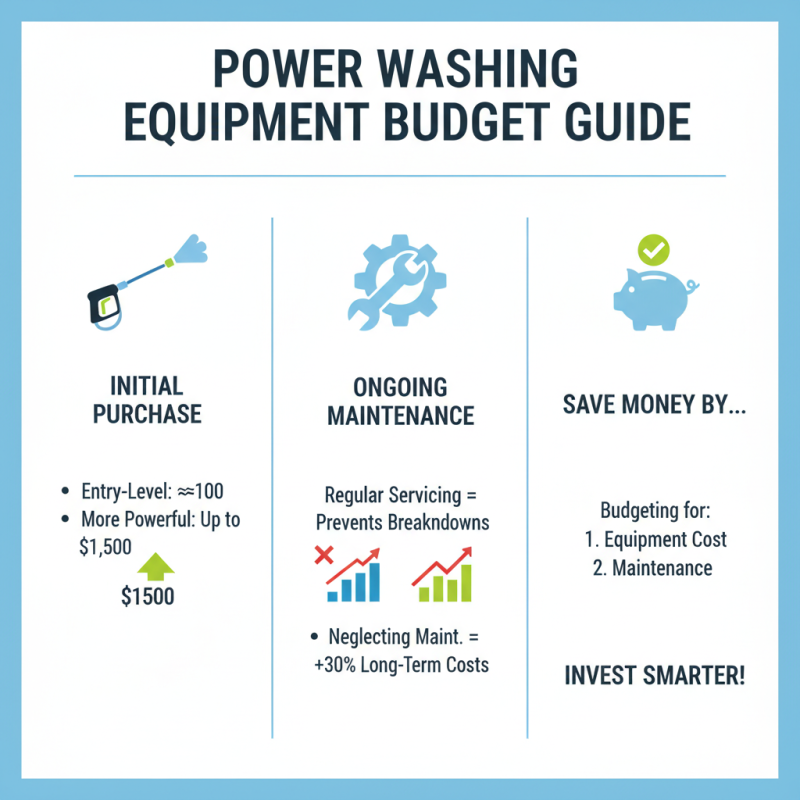
When budgeting for power washing equipment, costs can vary widely. An entry-level power washer can start at around $100. More powerful models can reach up to $1,500. Beyond the initial purchase, consider ongoing maintenance costs. Regular servicing can prevent costly breakdowns. Studies show that neglecting maintenance increases long-term expenses by 30%.
Tip: Always set aside 10-15% of your equipment's cost for annual maintenance. This small investment can save money later.
In addition to equipment costs, supplies like detergents and protective gear also matter. On average, a quality detergent may cost $15 to $50 per gallon. Protective gear, such as goggles and gloves, also adds to the budget. Remember to factor in these essentials when planning your finances. A survey found that many professionals often overlook these expenses, leading to budget overruns.
Tip: Create a detailed budget that includes all related costs. Revisit it every few months to adapt to changing needs. This practice can ensure you stay within your financial limits. Take your time to analyze every expense.